
Trial of Tariq Ramadan: the Islamic scholar hospitalized in psychiatry in Geneva
As the verdict in the rape trial of the preacher is due this Wednesday in his absence, two new lawyers for Tariq Ramadan informed the court this Tuesday morning that their client had been hospitalized again
ENGLISH CORNERACTUALITÉS
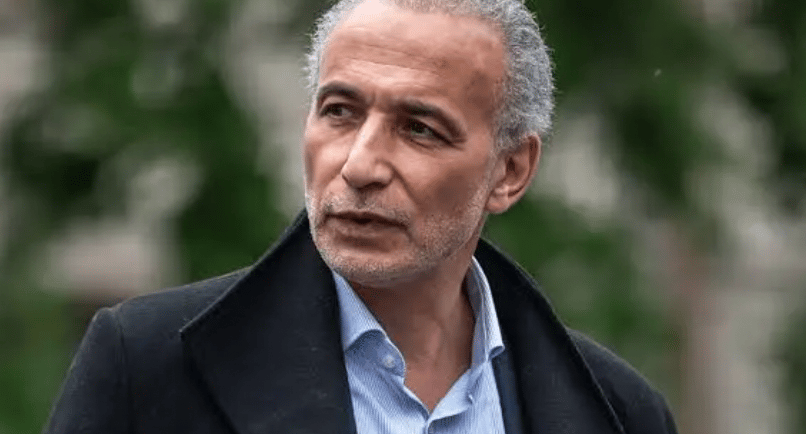
The Islamic scholar Tariq Ramadan, 63, had not appeared at the opening of his trial for the alleged rape of three women in Paris on March 2, citing health reasons.
His critics will undoubtedly see this as a final attempt to evade his judicial fate. For his defense, however, it is proof of the deterioration of his health, further supporting the certainty that Tariq Ramadan, 63, was not in a condition to be tried.
This Tuesday morning, according to our information, two new lawyers who recently joined the defense of the Muslim preacher informed the Paris criminal court that the well-known Islamic scholar had been hospitalized that morning in psychiatry in Geneva (Switzerland). A medical situation from which they want the justice system to draw all consequences, first and foremost a postponement of the hearings.
This latest development comes forty-eight hours before the verdict expected this Wednesday in a rape and aggravated rape trial that lasted three weeks. An extraordinary trial that took place behind closed doors and in the absence of the accused, currently in Switzerland according to him for medical reasons.
At the start of the proceedings on March 2, Tariq Ramadan did not appear in Paris. He stated that after going to visit his 93-year-old mother in Geneva, a flare-up of the multiple sclerosis he has suffered from for twenty years led to an initial hospitalization there, effectively preventing him from attending his trial. Of Egyptian origin and grandson of the founder of the Muslim Brotherhood, Tariq Ramadan is accused in France of raping three women between 2009 and 2016. These accusations he strongly denies.
The presiding judge of the Paris criminal court, Corinne Goetzmann, then appointed two French experts to examine Ramadan’s “case,” tasking them with contacting their Swiss counterparts and obtaining the Islamic scholar’s medical file.
“Worrying neurological condition”
At the end of this 18-page report, which Le Parisien was able to consult, the two practitioners answered in the affirmative the question posed by the court as to whether Tariq Ramadan could physically attend his trial. According to the experts, provided that regular breaks were allowed, nothing stood in the way. The court then considered Ramadan’s excuses invalid, issued an international arrest warrant against him, and decided that he would be tried in absentia. His defense, for its part, saw this as a “serious disregard” for his rights and opted for an empty-chair policy.
According to Dr. G. the neurologist who has been treating Tariq Ramadan in Switzerland since 2014 for his multiple sclerosis, the latter consulted him on January 21. At that time, Tariq Ramadan reported “a feeling of worsening motor function and balance, even sphincter-related issues.”
The same doctor nevertheless concluded that the examination was “rather reassuring.” A month later, on February 27, Tariq Ramadan this time complained of “visual disturbances” and “difficulty speaking,” during two episodes of about twenty minutes each. In view of this “worrying neurological picture,” Dr. G. decided on “additional examinations in the emergency department of the Geneva University Hospitals (HUG), rather than in Paris.” “His state of health does not currently allow him to travel,” the same doctor warned.
Tariq Ramadan was hospitalized from February 27 to March 5 in Geneva. A battery of tests was prescribed. The suspicion of a stroke was quickly ruled out. However, the overall clinical picture remained concerning, according to the hospitalization report we obtained.
A psychiatrist who examined him during those days spoke of a “lack of mental flexibility” and an “overall neuropsychological profile that appears to go beyond what would be expected from the known neurological condition,” namely multiple sclerosis.
At the end of this week of hospitalization, a “discharge report” was issued. It refers to “acute care,” as indicated in its title, meaning treatment related to a patient suffering from a serious condition. Under the “secondary diagnosis” to multiple sclerosis, the document notes “transient language disorders,” “cognitive and attentional impairments,” as well as “chronic urgency of urination.” In everyday terms, this means the need to go to the bathroom very frequently. Dated March 5, this document was given to Tariq Ramadan the same day at 9:16 a.m.
A sanitized version?
The French experts then ignored Tariq Ramadan’s regular neurologist, Dr. G., who states that he was never contacted. More importantly, the two experts relied on a hospitalization report also dated March 5, but timestamped at 10:35 a.m., which appears to be a sanitized version of the one given to Ramadan an hour earlier, as we were able to observe.
This time, the level of severity is no longer described as “acute,” but “intermediate.” The secondary diagnosis has simply disappeared, as has an “anxio-depressive syndrome” mentioned in the first report, the second now referring only to multiple sclerosis.
According to our information, Ramadan’s defense is therefore considering filing a complaint in Switzerland to shed light on this “evolving” medical opinion. “The real question that should have been asked was not whether Tariq Ramadan could be present at his trial, but whether he could be useful to his defense,” those close to him summarize. “And this time, the answer is clearly no.”
Conversely, the civil parties have pointed out that throughout the month of Ramadan that has just ended, the Islamic scholar appeared mentally sharp enough to comment daily on the Muslim fast on his Facebook page, as reported at the end of last week by Libération. “Texts or audio recordings prepared long in advance,” his entourage defends.
Has his condition deteriorated again since then? That is what the documents submitted this Tuesday morning to the court suggest. In particular, a certificate from a psychiatrist, Dr. K., written on Monday. This time, the practitioner refers to “disabling anxious and depressive symptomatology,” linked to multiple sclerosis. A condition that, according to him, requires psychotropic treatment “under medical supervision,” and therefore in a hospital setting. Proof, for Ramadan’s entourage, “that he is not on the run, but unable to appear.”